
Helensburgh Landcare Logo
+61 414 819 742
Helensburgh Landcare Logo
  • Home Home
  • Membership Membership
  • Be Weed Wise Be Weed Wise
    • Asparagus fern
    • Asthma weed
    • Black-eyed Susan
    • Blue periwinkle
    • Canna lily
    • Easter cassia
    • Cocos palm & Canary Island date palm
    • Dietes, Butterfly iris
    • English ivy
    • Formosan lily
    • Giant Bird of Paradise
    • Ginger lily
    • Japanese sacred bamboo
    • Liriope
    • Madeira vine
    • Montbretia
    • Moth vine
    • Mother of millions
    • Small leaf privet
  • Streamwatch Streamwatch
  • News and Updates News and Updates
  • Call Us +61 414 819 742 Call Us +61 414 819 742
Helensburgh Landcare Logo
+61 414 819 742
Helensburgh Landcare Logo
  • Home Home
  • Membership Membership
  • Be Weed Wise Be Weed Wise
    • Asparagus fern
    • Asthma weed
    • Black-eyed Susan
    • Blue periwinkle
    • Canna lily
    • Easter cassia
    • Cocos palm & Canary Island date palm
    • Dietes, Butterfly iris
    • English ivy
    • Formosan lily
    • Giant Bird of Paradise
    • Ginger lily
    • Japanese sacred bamboo
    • Liriope
    • Madeira vine
    • Montbretia
    • Moth vine
    • Mother of millions
    • Small leaf privet
  • Streamwatch Streamwatch
  • News and Updates News and Updates
  • Call Us +61 414 819 742 Call Us +61 414 819 742

Small leaf privet

Home/ Be Weed Wise/ Small leaf privet

Ligustrum sinense

Small leaf privet is native to Asia. This plant was commonly used as a hedge plant in the past but causes allergies in humans, and has become invasive in native bushland, and neglected gardens and wastelands. Small leaf privet is considered to be serious environmental weed throughout Australia. Infestations threaten biodiversity, including endangered plant and animal species and ecological communities. Dense stands of privet prevent other vegetation surviving or establishing.

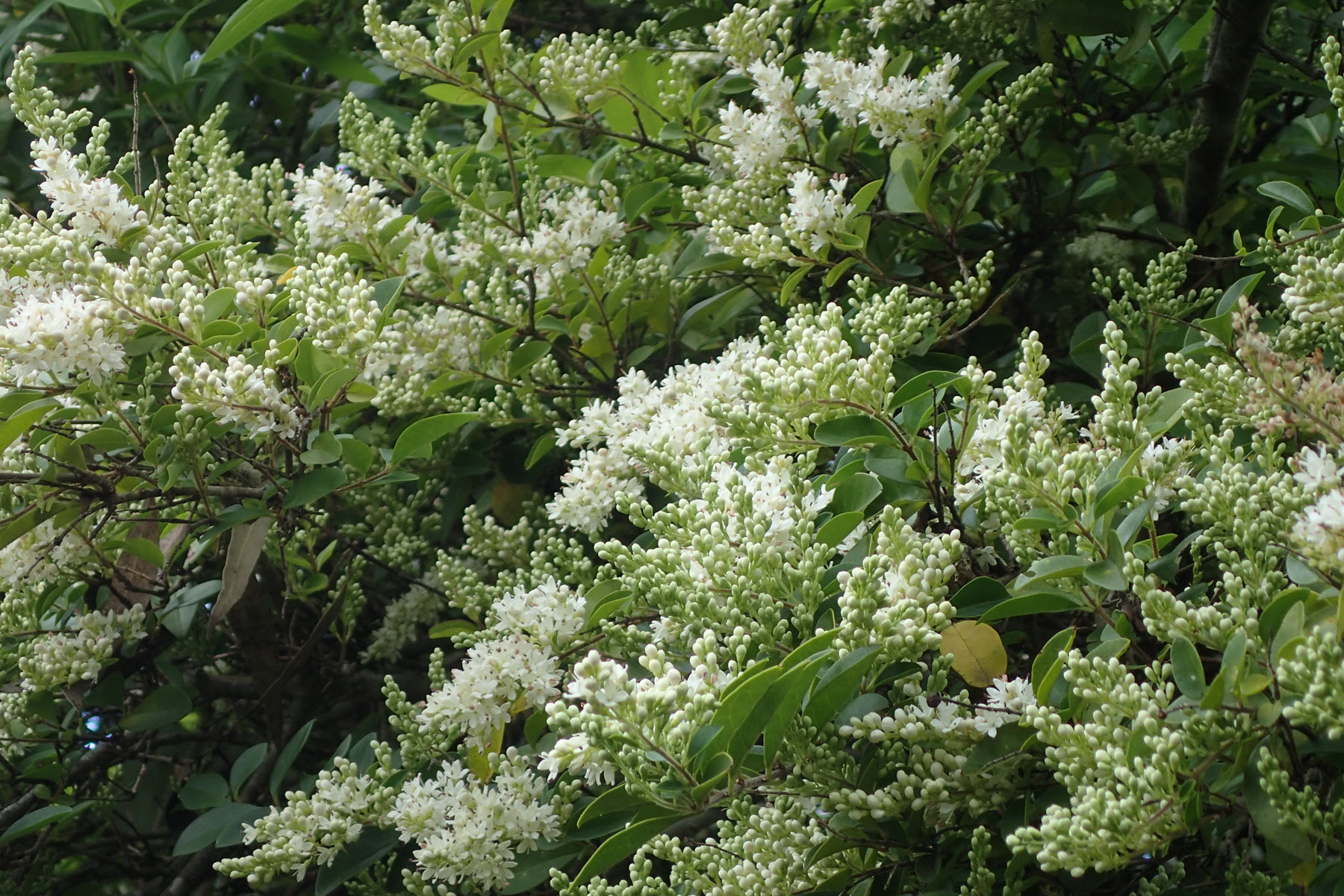
Small leaf privet is a shrub or small tree that has green leaves up to 7cm long, usually with wavy margins. Privet flowers in spring. Its flowers are small, white and strongly scented in large sprays on the ends of, or along, the branches. Flowers are followed by blue/black berries which are attractive to birds.

Dispersal: This species reproduces by seed and root suckers, and it also re-sprouts after its stems are deliberately cut or otherwise damaged. Its seeds are readily dispersed by fruit-eating birds and other animals. They may also be spread by water or in dumped garden waste.

Privet is unlikely to be sold in nurseries but may be available at fetes or markets. Do not plant it, and if it is already present in your garden, please remove it so it doesn’t get a chance to spread further. You may find privet seedlings coming up regularly in your garden under any trees.

Removal: Remove young plants by hand. This is best done when the soil is moist to ensure you do not break off or leave any of the root system in the ground. For plants that cannot be pulled out, carefully dig out the plant, removing as much of the root system as possible. Large plants may need chemical treatment.

Small leaf privet’s larger ‘cousin’, large leaf privet, Ligustrum lucidum, is also present in Helensburgh and is a problem in some areas.
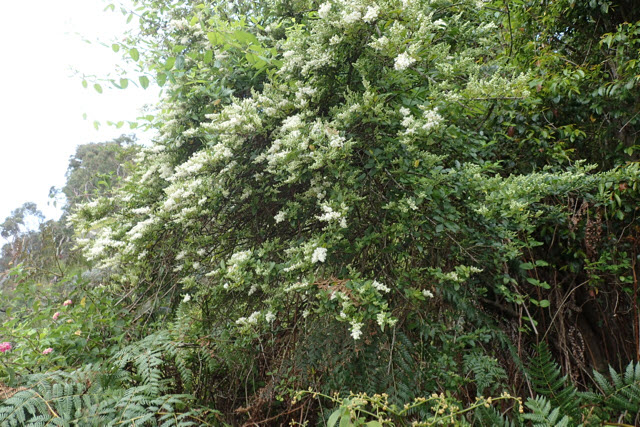
Privet Bush
Privet Flowers

Grow Me Instead

Grevillea biternata 

A grevillea from WA with a massed display of creamy white flowers.


Leptospermum ‘Cardwell’

Gracefully weeping aromatic evergreen foliage, covered in white flowers late winter to spring.


25 Tunnel Road, Helensburgh,
NSW 2508 Australia

 merilyn@helensburghlandcare.org.au

 0414 819 742

Stay Connected

Helensburgh & District Landcare Group acknowledges the traditional custodians of the land. We pay respect to Aboriginal Elders past, present and emerging, and extend that respect to other First Nations people. We value their deep and continued spiritual and cultural connections to the land, waters and seas.

Helensburgh & District Landcare Group Inc is a non-governmental community movement dedicated to preventing land degradation and achieving sustainable land management, primarily in the 2508 postcode.

ABN: 12 869 870 867

https://landcareaustralia.org.au

Our site is powered by Easy Brew, a product created by Code Brewery®.