Helensburgh Landcare Logo
+61 414 819 742
Helensburgh Landcare Logo
  • Home Home
  • Membership Membership
  • Be Weed Wise Be Weed Wise
    • Asparagus fern
    • Asthma weed
    • Black-eyed Susan
    • Blue periwinkle
    • Canna lily
    • Easter cassia
    • Cocos palm & Canary Island date palm
    • Dietes, Butterfly iris
    • English ivy
    • Formosan lily
    • Giant Bird of Paradise
    • Ginger lily
    • Japanese sacred bamboo
    • Liriope
    • Madeira vine
    • Montbretia
    • Moth vine
    • Mother of millions
    • Small leaf privet
  • Streamwatch Streamwatch
  • News and Updates News and Updates
  • Call Us +61 414 819 742 Call Us +61 414 819 742
Helensburgh Landcare Logo
+61 414 819 742
Helensburgh Landcare Logo
  • Home Home
  • Membership Membership
  • Be Weed Wise Be Weed Wise
    • Asparagus fern
    • Asthma weed
    • Black-eyed Susan
    • Blue periwinkle
    • Canna lily
    • Easter cassia
    • Cocos palm & Canary Island date palm
    • Dietes, Butterfly iris
    • English ivy
    • Formosan lily
    • Giant Bird of Paradise
    • Ginger lily
    • Japanese sacred bamboo
    • Liriope
    • Madeira vine
    • Montbretia
    • Moth vine
    • Mother of millions
    • Small leaf privet
  • Streamwatch Streamwatch
  • News and Updates News and Updates
  • Call Us +61 414 819 742 Call Us +61 414 819 742

English ivy

Home/ Be Weed Wise/ English ivy

Hedera helix

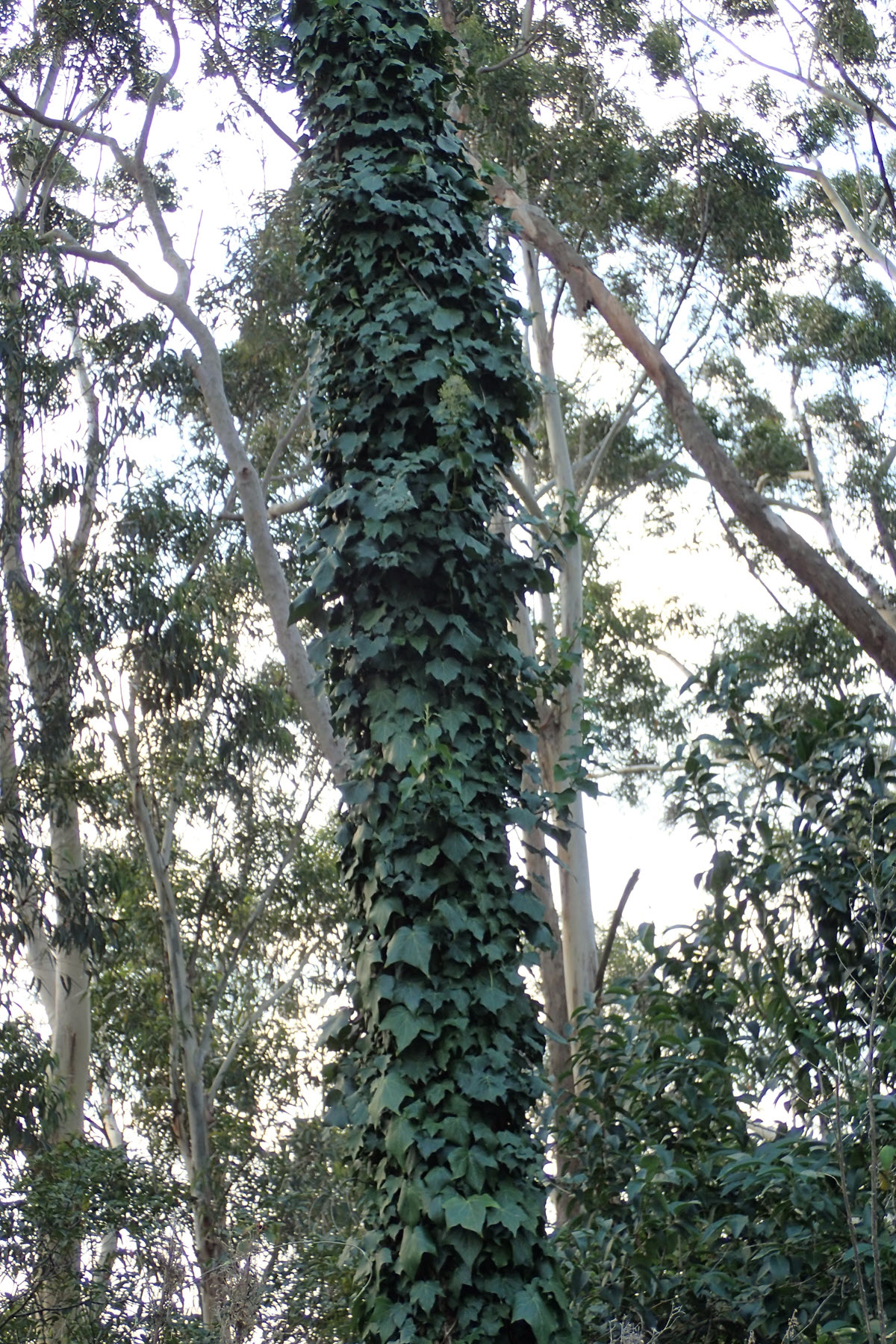
A native of northern Africa, Europe and western Asia, English ivy, a widely cultivated garden plant, is widely naturalised in Australia.  Ivy is a climber or creeper which forms aerial roots which attach to supporting structures. It spreads rapidly, blanketing the ground in a thick mat of vegetation. This excludes light, eventually choking out other species and preventing their germination. Ivy also grows thickly up over tall trees and shrubs, smothering them and even causing them to fall over under its weight.

Ivy has 3 lobed leaves, which are thin-textured and only slightly glossy, often with a slight whitish marbling. Leaves on flowering stems are larger, and are not lobed. It has inconspicuous greenish flowers in clusters, followed by black berries.

If you have ivy growing in your garden, please don’t let it grow up trees or fences, or anywhere high. Once it is up there, it flowers and the seeds are spread by birds into surrounding bushland (or even into your neighbours’ properties). The other way ivy spreads into bushland is through dumping of garden waste. 

Removal: Hand-pull small plants and remove. Plants left lying on the ground will re-grow. For badly infested trees, cut away at least the bottom metre of ivy stems around the trunk and apply herbicide to both ends of the cut stems. Do not try to pull ivy down. Treat it and leave it to die in place.
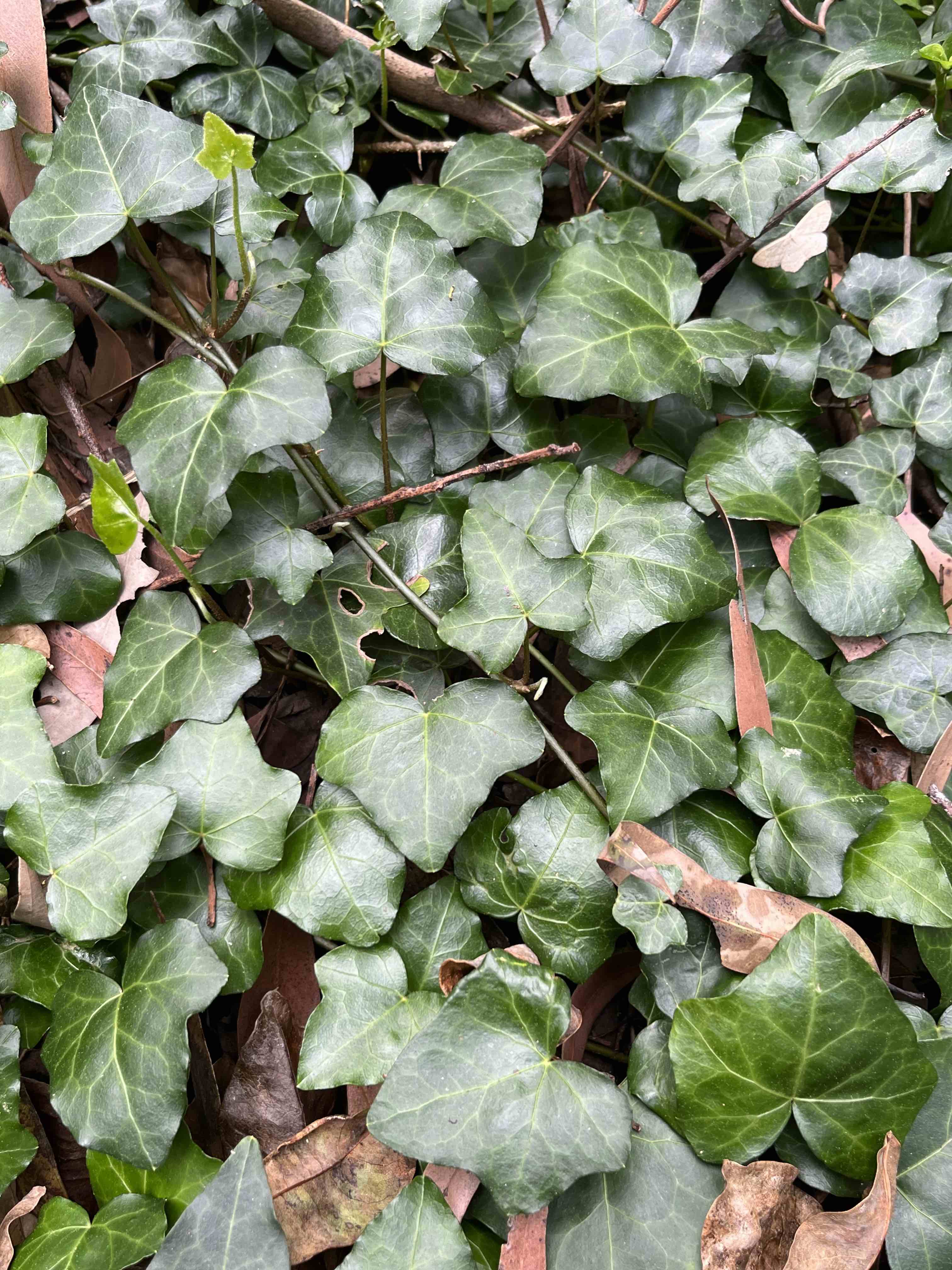
Ivy New Image
Ivy On Tree

Grow Me Instead

Wonga vine, Pandorea pandorana
This local native vine will cover a fence or trellis. It has cream flowers with brown or purple streaks, although yellow and white flowered cultivars are available.


Rasp fern, Doodia aspera
It makes a good groundcover for a shady site, but will also tolerate full
sun and is one of the most drought-tolerant local native ferns.

25 Tunnel Road, Helensburgh,
NSW 2508 Australia

 merilyn@helensburghlandcare.org.au

 0414 819 742

Stay Connected

Helensburgh & District Landcare Group acknowledges the traditional custodians of the land. We pay respect to Aboriginal Elders past, present and emerging, and extend that respect to other First Nations people. We value their deep and continued spiritual and cultural connections to the land, waters and seas.

Helensburgh & District Landcare Group Inc is a non-governmental community movement dedicated to preventing land degradation and achieving sustainable land management, primarily in the 2508 postcode.

ABN: 12 869 870 867

https://landcareaustralia.org.au

Our site is powered by Easy Brew, a product created by Code Brewery®.