
Helensburgh Landcare Logo
+61 414 819 742
Helensburgh Landcare Logo
  • Home Home
  • Membership Membership
  • Be Weed Wise Be Weed Wise
    • Asparagus fern
    • Asthma weed
    • Black-eyed Susan
    • Blue periwinkle
    • Canna lily
    • Easter cassia
    • Cocos palm & Canary Island date palm
    • Dietes, Butterfly iris
    • English ivy
    • Formosan lily
    • Giant Bird of Paradise
    • Ginger lily
    • Japanese sacred bamboo
    • Liriope
    • Madeira vine
    • Montbretia
    • Moth vine
    • Mother of millions
    • Small leaf privet
  • Streamwatch Streamwatch
  • News and Updates News and Updates
  • Call Us +61 414 819 742 Call Us +61 414 819 742
Helensburgh Landcare Logo
+61 414 819 742
Helensburgh Landcare Logo
  • Home Home
  • Membership Membership
  • Be Weed Wise Be Weed Wise
    • Asparagus fern
    • Asthma weed
    • Black-eyed Susan
    • Blue periwinkle
    • Canna lily
    • Easter cassia
    • Cocos palm & Canary Island date palm
    • Dietes, Butterfly iris
    • English ivy
    • Formosan lily
    • Giant Bird of Paradise
    • Ginger lily
    • Japanese sacred bamboo
    • Liriope
    • Madeira vine
    • Montbretia
    • Moth vine
    • Mother of millions
    • Small leaf privet
  • Streamwatch Streamwatch
  • News and Updates News and Updates
  • Call Us +61 414 819 742 Call Us +61 414 819 742

Blue periwinkle

Home/ Be Weed Wise/ Blue periwinkle

Vinca major

Blue periwinkle is an example of a garden plant that has ‘jumped the garden fence’. It is now considered an invasive species, not just in wetter areas of Australia, but in New Zealand and North America (USA and Canada).

It is a trailing herb with a woody crown and runners up to 1 m long. The stems sometimes develop roots where they come into contact with the soil, and creeping underground stems are also produced. It has blue to purple tubular flowers (3-6 cm across) which are usually borne singly in the upper leaf forks.

Blue periwinkle’s broad-leaved runners form a dense mat, shading out native plants and competing for moisture and nutrients. Its growth is particularly vigorous in riparian and other moist habitats.

It is spread into bushland mostly by dumping of garden waste, but can also spread by broken stem bits being washed into a new area. It occasionally spreads by seed.

Digging every little bit out is the most effective way of removing it. Follow up will be required for some time.
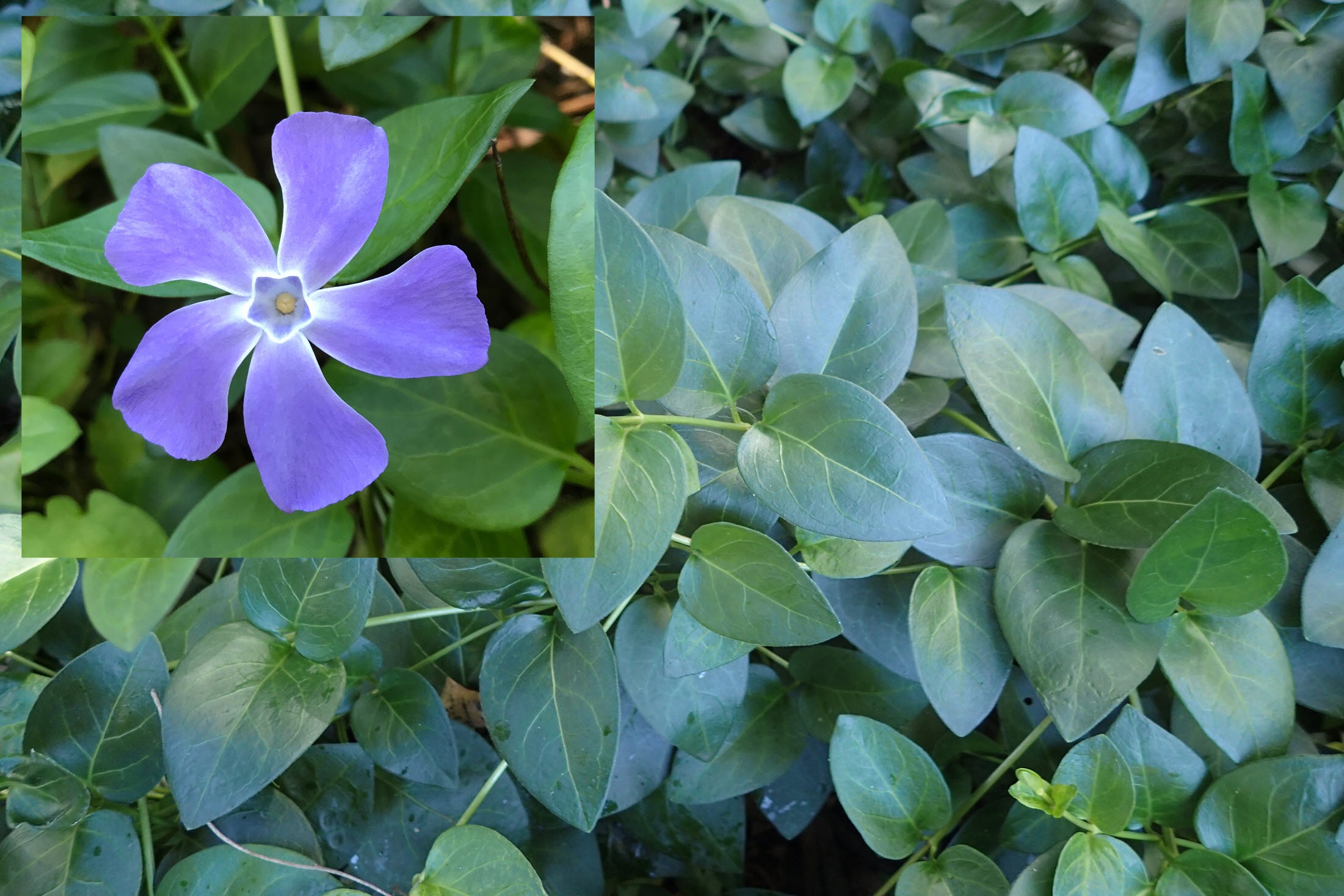
Blue Periwinkle

Grow Me Instead

Scaevola species, fan flower: An Australian native groundcover with prolific flowering of mauve, purple or white flowers.


Hardenbergia violacea, Native sarsaparilla: The pea shape flowers appear in winter and spring and are usually violet in colour.

25 Tunnel Road, Helensburgh,
NSW 2508 Australia

 merilyn@helensburghlandcare.org.au

 0414 819 742

Stay Connected

Helensburgh & District Landcare Group acknowledges the traditional custodians of the land. We pay respect to Aboriginal Elders past, present and emerging, and extend that respect to other First Nations people. We value their deep and continued spiritual and cultural connections to the land, waters and seas.

Helensburgh & District Landcare Group Inc is a non-governmental community movement dedicated to preventing land degradation and achieving sustainable land management, primarily in the 2508 postcode.

ABN: 12 869 870 867

https://landcareaustralia.org.au

Our site is powered by Easy Brew, a product created by Code Brewery®.