
Helensburgh Landcare Logo
+61 414 819 742
Helensburgh Landcare Logo
  • Home Home
  • Membership Membership
  • Be Weed Wise Be Weed Wise
    • Asparagus fern
    • Asthma weed
    • Black-eyed Susan
    • Blue periwinkle
    • Canna lily
    • Easter cassia
    • Cocos palm & Canary Island date palm
    • Dietes, Butterfly iris
    • English ivy
    • Formosan lily
    • Giant Bird of Paradise
    • Ginger lily
    • Japanese sacred bamboo
    • Liriope
    • Madeira vine
    • Montbretia
    • Moth vine
    • Mother of millions
    • Small leaf privet
  • Streamwatch Streamwatch
  • News and Updates News and Updates
  • Call Us +61 414 819 742 Call Us +61 414 819 742
Helensburgh Landcare Logo
+61 414 819 742
Helensburgh Landcare Logo
  • Home Home
  • Membership Membership
  • Be Weed Wise Be Weed Wise
    • Asparagus fern
    • Asthma weed
    • Black-eyed Susan
    • Blue periwinkle
    • Canna lily
    • Easter cassia
    • Cocos palm & Canary Island date palm
    • Dietes, Butterfly iris
    • English ivy
    • Formosan lily
    • Giant Bird of Paradise
    • Ginger lily
    • Japanese sacred bamboo
    • Liriope
    • Madeira vine
    • Montbretia
    • Moth vine
    • Mother of millions
    • Small leaf privet
  • Streamwatch Streamwatch
  • News and Updates News and Updates
  • Call Us +61 414 819 742 Call Us +61 414 819 742

Black-eyed Susan

Home/ Be Weed Wise/ Black-eyed Susan

Thunbergia alata

Black-eyed Susan is a native to tropical and southern Africa. It was grown widely as a garden climber, but has, unfortunately, become an environmental weed in the coastal districts of eastern Australia and south-western Western Australia. It is also a weed overseas in southern USA, Papua New Guinea and on several Pacific islands.


Black-eyed Susan is a long-lived vine growing up to 5 metres, and spreading along the ground. It has opposite leaves which are heart shaped, and often finely hairy. It has singular orange or yellow flowers with a black centre, and flowers in the spring and summer. It has a tap root and fibrous roots, and will actively seek and block water/septic pipes.


This species reproduces by seed, and vegetatively by fragments of stems and roots. Seeds and plant fragments can be spread in dumped garden waste. They can also be spread by water and vehicles. It can smother shrubs and groundcover in moist bushland.


Remove by pulling out at the roots. Vines remaining in vegetation can be left to die. Watch for new seedlings, and remove as they appear.
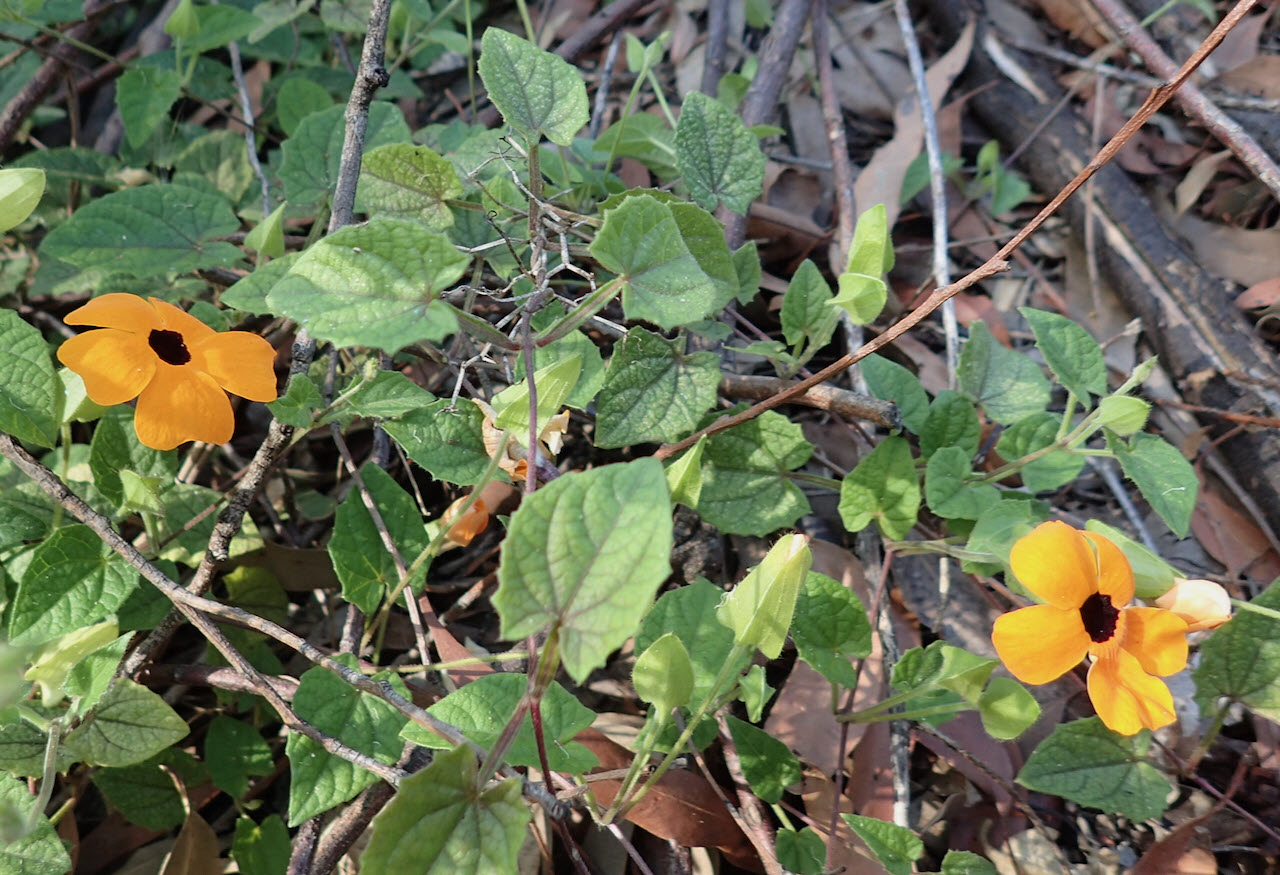
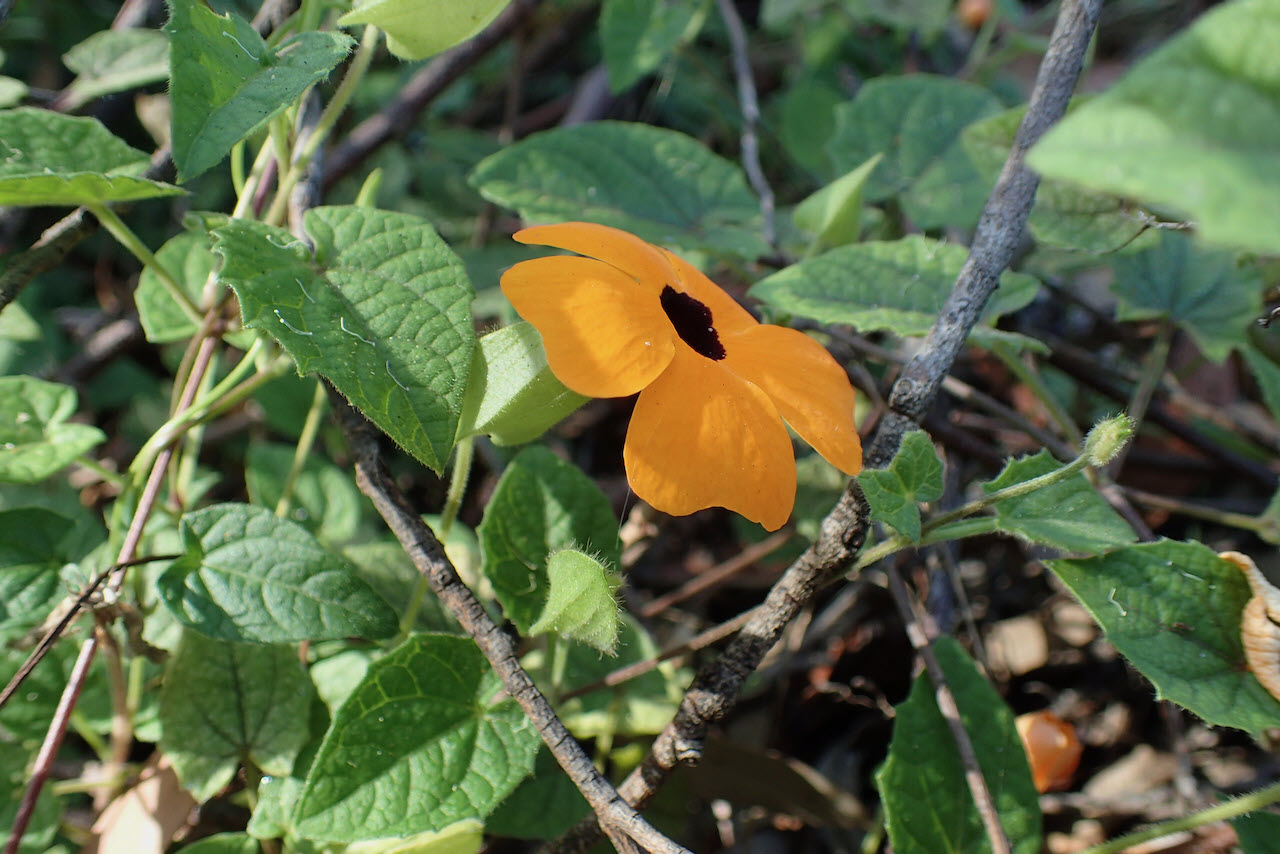
Black Eyed Susan 1
Black Eyed Susan 2

Grow Me Instead

Snake vine, Hibbertia scandens
This local vine has bright green leaves with large yellow flowers. This is a vigorous climber or scrambler which grows to 2 to 5m wide or high
 
Wonga wonga vine, Pandorea pandorana
This is a vigorous Australian native twining plant. A number of selected colour forms of this species have been brought into cultivation, the most common is 'Snowbells' with pure white flowers and 'Golden Showers' with yellow-bronze flowers.

25 Tunnel Road, Helensburgh,
NSW 2508 Australia

 merilyn@helensburghlandcare.org.au

 0414 819 742

Stay Connected

Helensburgh & District Landcare Group acknowledges the traditional custodians of the land. We pay respect to Aboriginal Elders past, present and emerging, and extend that respect to other First Nations people. We value their deep and continued spiritual and cultural connections to the land, waters and seas.

Helensburgh & District Landcare Group Inc is a non-governmental community movement dedicated to preventing land degradation and achieving sustainable land management, primarily in the 2508 postcode.

ABN: 12 869 870 867

https://landcareaustralia.org.au

Our site is powered by Easy Brew, a product created by Code Brewery®.